The project will take place at Hillstate The Wave City in Siheung, Gyeonggi Province. The trio, including Hyundai Motor, Hyundai Wia, and Hyundai Engineering & Construction, will collaborate in this trial, which has been approved under South Korea’s smart city regulatory sandbox program and will receive government funding.
The complex has a total of 1,796 households and is expected to begin accommodating residents next year. Two sets of Hyundai Wia parking robots will operate in a dedicated area with 53 parking spaces on the first basement level.
How Hyundai’s autonomous parking robots work
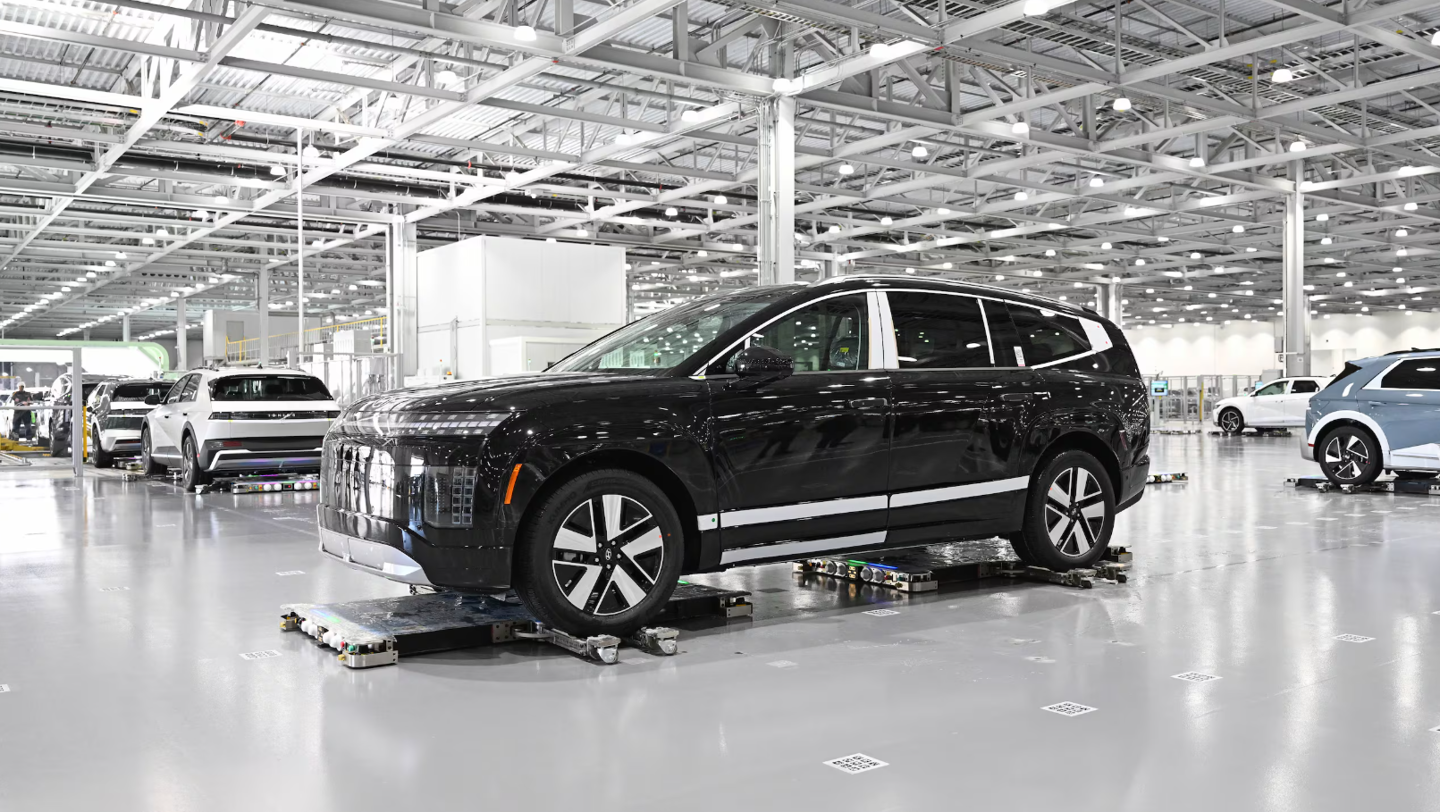
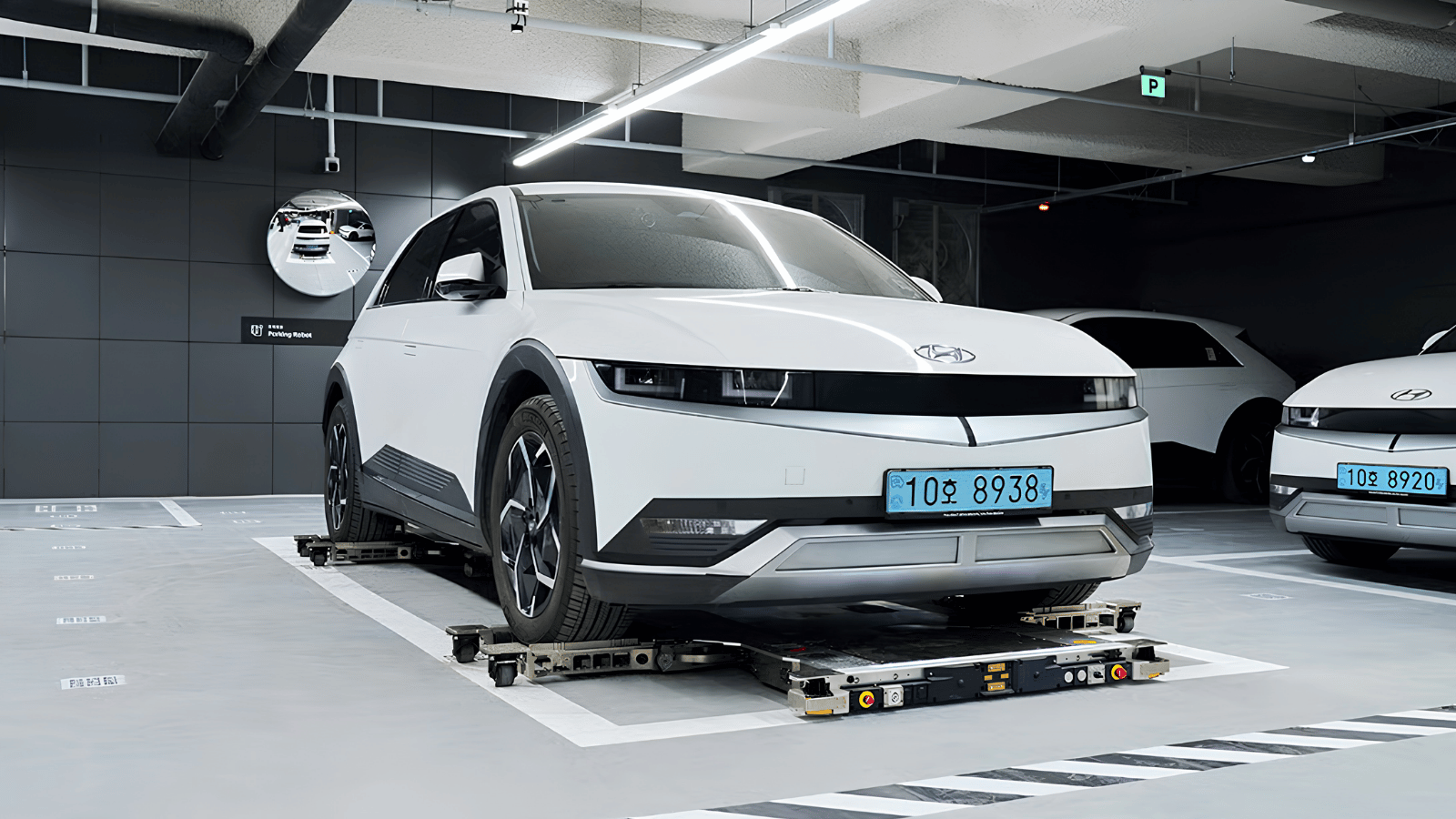
When a driver leaves a vehicle at the designated drop-off area, the parking robot moves underneath the vehicle, detects its tires, lifts its wheels, and transports it to an available parking space. This will be kind of a valet parking, but with the drivers underneath the vehicle. Users will also be able to retrieve their vehicles through a kiosk or a wall-mounted control panel inside the residential complex.
Each parking robot system consists of a pair of thin units measuring 110mm in height. The key ingredient to this technology is LiDAR sensors, which are used to determine the size and position of the vehicle’s wheels before lifting it. The robots can move in all directions and transport vehicles weighing up to 3.4 tons at speeds of up to 1.2 m/s, allowing them to handle SUVs as well.
The benefits are not just saving your time finding a parking spot or safety from crashing during parallel parking; Hyundai estimates that using the robots could increase parking capacity within the same floor area by at least 20% and potentially as much as 50%. Separating vehicle and pedestrian movement could also reduce the risk of accidents inside parking garages, while eliminating the need for drivers to circulate in search of a space.
During the trial, Hyundai will measure parking and retrieval times, actual user waiting times, parking success rates, robot utilization, monthly completed tasks, and improvements in parking-space efficiency. The resulting data will be used to develop operating standards for deploying the system in residential, commercial, office, public, and transportation facilities. If the trials go successful, hopefully we will be able to see autonomous parking robots in more places.